Lars Butler · 15 October 2026
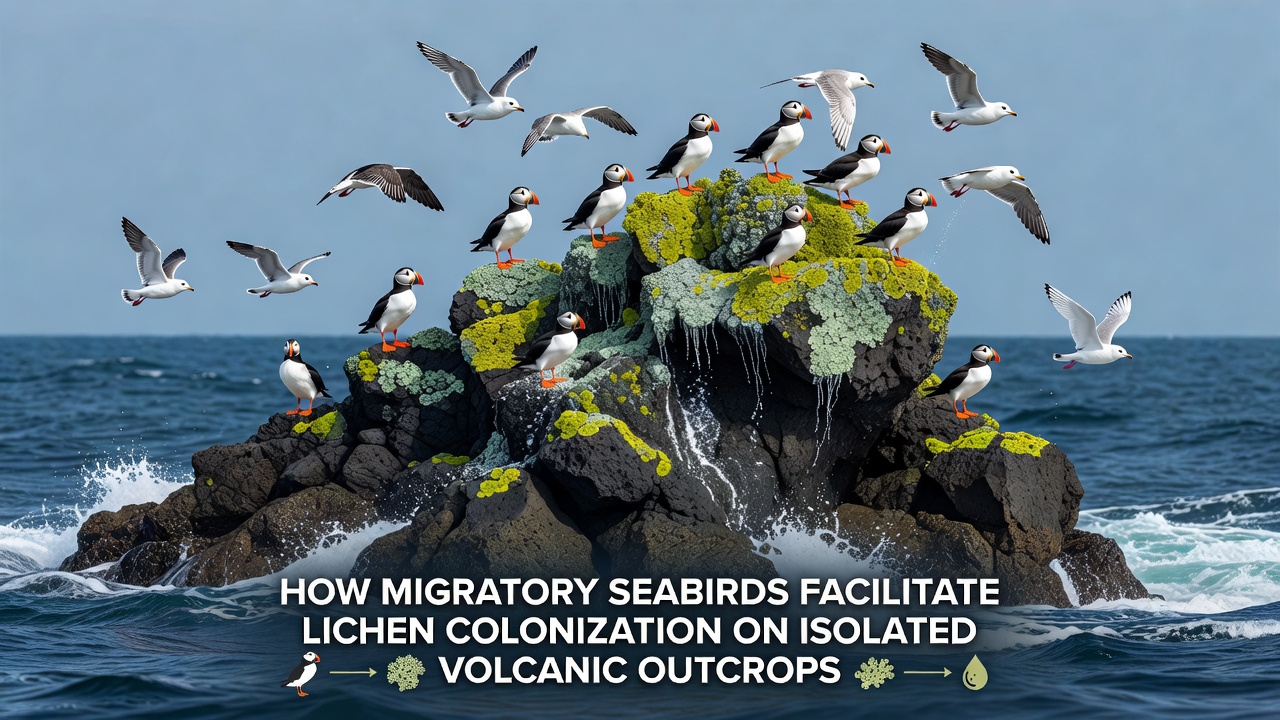
How Migratory Seabirds Facilitate Lichen Colonization on Isolated Volcanic Outcrops
Isolated volcanic outcrops rise abruptly from ocean waters and present harsh conditions that limit traditional plant establishment, yet lichens appear regularly on these sites through biological vectors that researchers have documented across multiple ocean basins. Migratory seabirds travel thousands of kilometers between breeding colonies and feeding grounds, and their movements create direct pathways for lichen propagules to reach otherwise inaccessible rock surfaces. Data from long-term monitoring programs show that bird landings coincide with the first appearances of lichen thalli on newly formed lava flows and ash deposits.
Seabird Migration Routes and Island Landings
Species such as northern fulmars and sooty shearwaters follow consistent flyways that intersect chains of volcanic islands in the North Pacific and South Atlantic, and these birds stop on exposed outcrops to rest or nest during seasonal movements. Observers note that individuals often arrive carrying microscopic lichen fragments attached to feathers or feet, while some species ingest lichen material incidentally while foraging and later deposit viable spores through regurgitation or feces. Studies conducted by the National Oceanic and Atmospheric Administration have tracked tagged birds landing on remote seamounts where lichen cover increased measurably within two breeding seasons after initial visits.
Transport of Lichen Propagules
Lichen spores and soredia measure only a few micrometers across, allowing them to adhere to plumage or skin without dislodging during flight, and laboratory tests confirm that these structures retain viability after exposure to saltwater spray and temperature fluctuations typical of transoceanic journeys. When seabirds alight on bare basalt or rhyolite, the mechanical action of landing and preening releases particles onto the substrate, while wind currents generated by wingbeats further distribute material across crevices and ledges. Researchers from the University of Auckland documented higher densities of lichen colonization on rocks where shearwater colonies had been active compared with adjacent sites lacking bird traffic.
Nutrient Inputs from Seabird Activity
Guano deposits supply nitrogen, phosphorus, and trace minerals that transform nutrient-poor volcanic rock into substrates capable of supporting lichen growth, and chemical analyses reveal elevated ammonium and phosphate levels within meters of nesting sites. These inputs create localized fertile zones where pioneer lichens such as Placopsis and Stereocaulon establish thalli more rapidly than on untreated surfaces. The process accelerates during peak migration periods when thousands of birds congregate, concentrating organic matter that persists through subsequent dry seasons. In October 2026, satellite imagery from several Pacific island groups showed expanded lichen patches precisely where guano accumulation had been mapped in prior years.
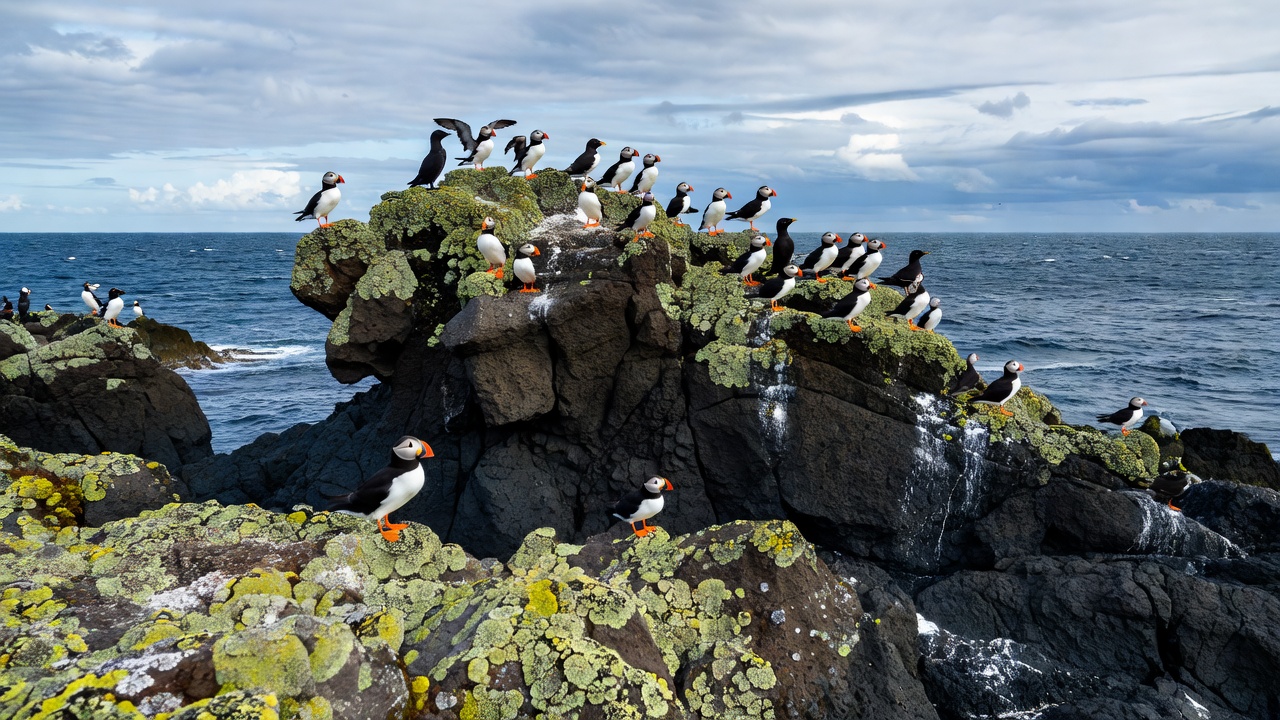
Yet the relationship extends beyond simple fertilization, because seabird trampling and nest-building activities also fracture rock surfaces and create microhabitats that retain moisture, allowing lichen rhizines to anchor more securely. Field measurements indicate that colonized areas experience reduced surface temperatures and higher humidity levels beneath established thalli, conditions that favor further lichen expansion and secondary colonization by additional species.
Evidence from Volcanic Island Systems
Following the 2022 eruption at Bogoslof Island in Alaska, researchers recorded the arrival of migratory birds within months and the appearance of lichen colonies within three years, patterns consistent with similar sequences observed after eruptions at Tristan da Cunha and the Canary Islands. Data collected by Canadian Wildlife Service teams demonstrate that sites visited by at least three seabird species per season develop lichen cover at rates five times higher than sites with minimal bird activity. Genetic analysis of lichen samples from these locations frequently matches populations found on distant source islands along established migration corridors, supporting the role of birds as vectors rather than wind alone.
Interactions with Environmental Factors
Although wind can carry lightweight spores, the concentration of lichen establishment near bird perches and nesting ledges points to directed transport by seabirds, and comparative studies across wind-exposed versus sheltered outcrops show stronger correlations with bird presence than with prevailing wind direction. Salt spray and temperature extremes continue to shape which lichen species succeed, yet the initial arrival and nutrient boost provided by migratory visitors determine whether colonization begins at all on the most isolated formations. Continued monitoring programs will track whether shifting migration timing due to changing ocean temperatures alters these patterns in coming decades.
Conclusion
The facilitation of lichen colonization on isolated volcanic outcrops by migratory seabirds represents a documented ecological linkage that combines physical transport, nutrient enrichment, and habitat modification, and long-term data sets confirm the repeatability of this process across ocean regions. Researchers continue to map these interactions to understand how changes in seabird populations may influence lichen distribution on newly formed or recovering volcanic landscapes.