Drew Hartmann · 17 September 2026
The Influence of Salt-Laden Breezes on Lichen Adaptations in Far-Flung Island Chains
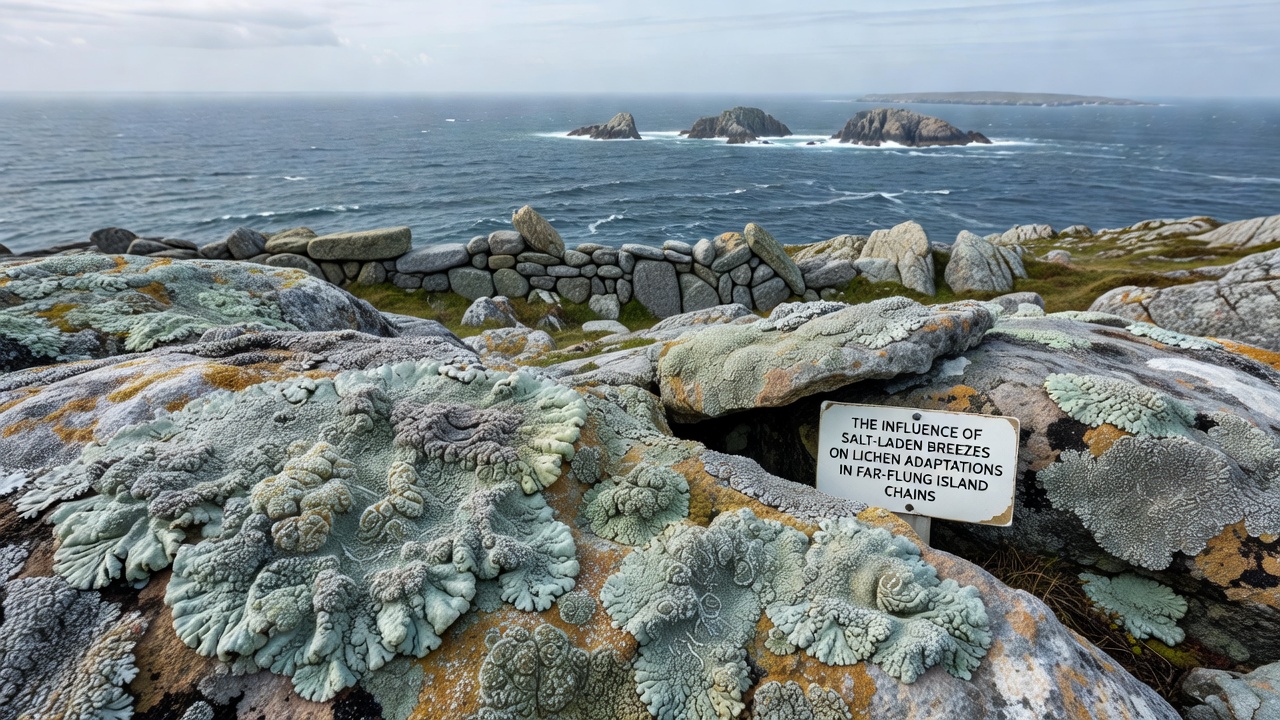
Remote island chains scattered across vast oceans create unique environments where salt-laden breezes shape the survival strategies of lichens, those symbiotic organisms formed by fungi and algae or cyanobacteria working together. These breezes carry sodium chloride particles inland from breaking waves, exposing lichens on exposed rocks and tree bark to constant osmotic stress and desiccation cycles that differ sharply from mainland conditions. Researchers have documented how such exposure drives specific physiological and morphological changes in lichen species across locations like the Galápagos, Hawaiian archipelago, and sub-Antarctic islands.
Core Biology of Lichens in Coastal Settings
Lichens function as pioneer species on barren surfaces, yet salt breezes introduce challenges that select for tolerant variants because high salinity disrupts water uptake and damages cellular structures in sensitive individuals. Studies show that coastal populations often exhibit thicker cortical layers compared to inland ones, a trait that reduces salt penetration while maintaining gas exchange for photosynthesis. Data from field surveys indicate that species such as Ramalina and Usnea dominate windward slopes where aerosol deposition peaks, whereas leeward sides support more diverse assemblages with less salt tolerance.
What's interesting is how the symbiotic partnership itself adapts under these pressures. The fungal partner frequently produces secondary metabolites like usnic acid that offer protection against oxidative damage from salt-induced stress, while the photosynthetic partner adjusts its chlorophyll content to sustain energy production despite periodic dehydration. Observers note that these adjustments occur gradually across generations, allowing populations to persist where rainfall is irregular and evaporation rates remain high due to constant wind.
Mechanisms of Salt Tolerance and Morphological Shifts
Lichens facing salt-laden breezes develop several adaptations that mitigate ion toxicity and maintain structural integrity. One common response involves the accumulation of compatible solutes such as mannitol and arabitol inside cells, which balance external osmotic pressure without interfering with enzymatic functions. Research indicates that concentrations of these polyols rise measurably in thalli collected from sites within 500 meters of shorelines compared to those farther inland.
Another adaptation appears in growth form. Many island lichens adopt compact, cushion-like thalli or produce soredia and isidia that facilitate vegetative reproduction under turbulent conditions where sexual structures might fail. And because wind speeds often exceed 20 kilometers per hour on exposed ridges, these reproductive propagules get dispersed efficiently across the island chain, promoting genetic mixing among populations separated by short water gaps. Turns out these traits vary by island size and elevation, with larger landmasses supporting intermediate forms that blend salt tolerance with shade adaptations in forested interiors.
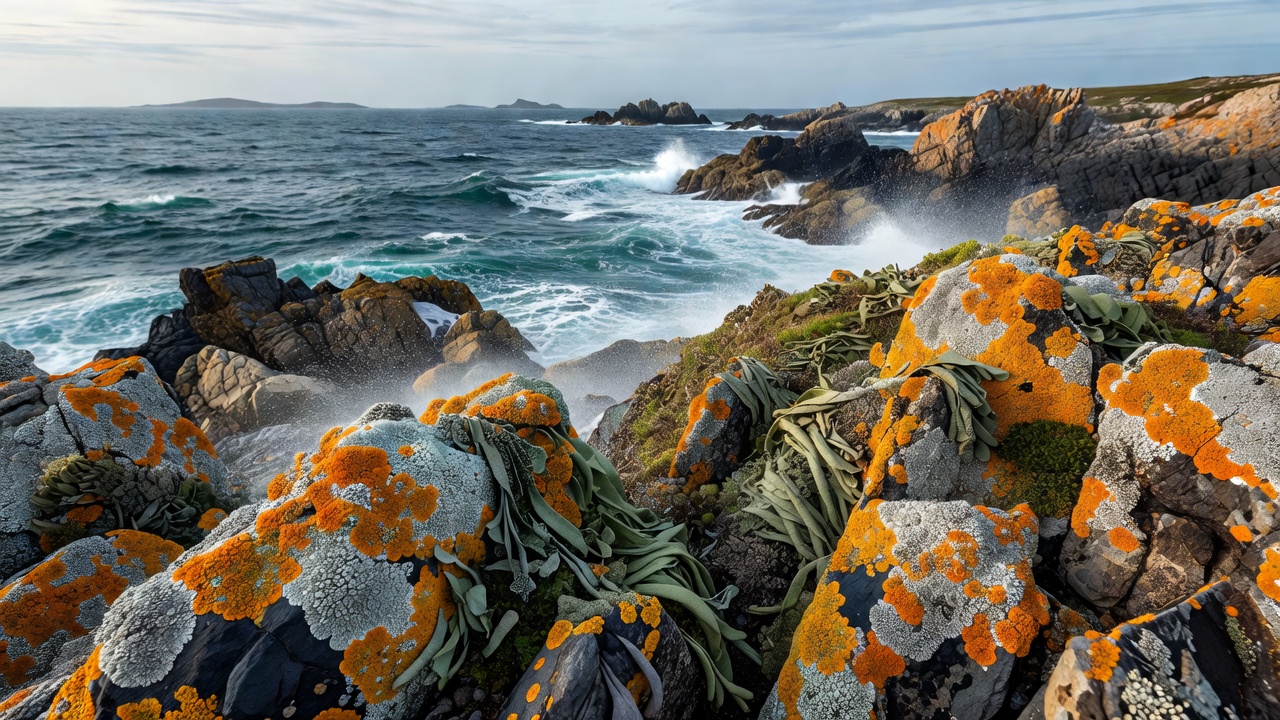
Evidence from monitoring programs reveals seasonal patterns tied to prevailing wind directions. During periods of stronger trade winds, salt deposition increases, prompting temporary reductions in net photosynthesis that recover once humidity rises. In September 2026, a multi-island survey coordinated across Pacific sites recorded peak salinity levels on thalli surfaces coinciding with El Niño-driven wind anomalies, highlighting how climate variability amplifies these stresses and accelerates selection for resilient genotypes.
Distribution Patterns Across Island Chains
Species distribution maps compiled from herbarium records and recent expeditions demonstrate clear zonation linked to salt aerosol gradients. On the windward coasts of far-flung chains, halotolerant specialists occupy the first few hundred meters, giving way to generalist species as distance from the sea increases and salt loads decline. This pattern repeats across hemispheres because the underlying driver remains consistent: aerosol transport depends on wind velocity, wave height, and topography rather than latitude alone.
Those who've studied these systems know that microhabitats such as crevices and the lee sides of boulders create refugia where salt accumulation stays lower, allowing less tolerant lichens to coexist within otherwise harsh zones. Genetic analyses further show limited gene flow between adjacent islands when straits exceed 10 kilometers, resulting in distinct local adaptations even within the same nominal species. According to findings from the U.S. Geological Survey Pacific Island Ecosystems Research Center, these genetic differences correlate strongly with measured sodium concentrations in thallus tissues.
Interactions with Other Environmental Factors
Salt breezes rarely act in isolation. Nutrient inputs from sea spray, including potassium and magnesium, can enhance growth rates in tolerant species while ultraviolet radiation and temperature fluctuations compound cellular damage. Researchers discovered that lichens in these settings often pair salt tolerance with UV-protective pigments, creating multi-stress resistance that proves advantageous during prolonged dry spells. Data collected over multi-year periods reveal that growth increments drop by up to 30 percent in high-salt zones during drought years, yet populations rebound when moisture returns because the underlying symbiosis recovers quickly once osmotic balance restores.
What's significant is the role these adaptations play in broader island ecology. Lichens contribute to soil formation and provide microhabitats for invertebrates, so shifts in their distribution under changing wind patterns could influence dependent organisms. Monitoring efforts by groups such as the CSIRO Biodiversity Research track these cascading effects across Australian external territories, providing baseline measurements for future comparisons.
Conclusion
Salt-laden breezes exert measurable selective pressure on lichens throughout remote island chains, resulting in physiological adjustments, morphological specialization, and distinct distribution patterns that reflect local wind and aerosol regimes. Ongoing research continues to quantify how these factors interact with climate variability, offering insights into resilience mechanisms that sustain biodiversity in isolated oceanic environments. The patterns observed today supply reference points for tracking future changes driven by shifts in wind regimes and sea spray intensity.